
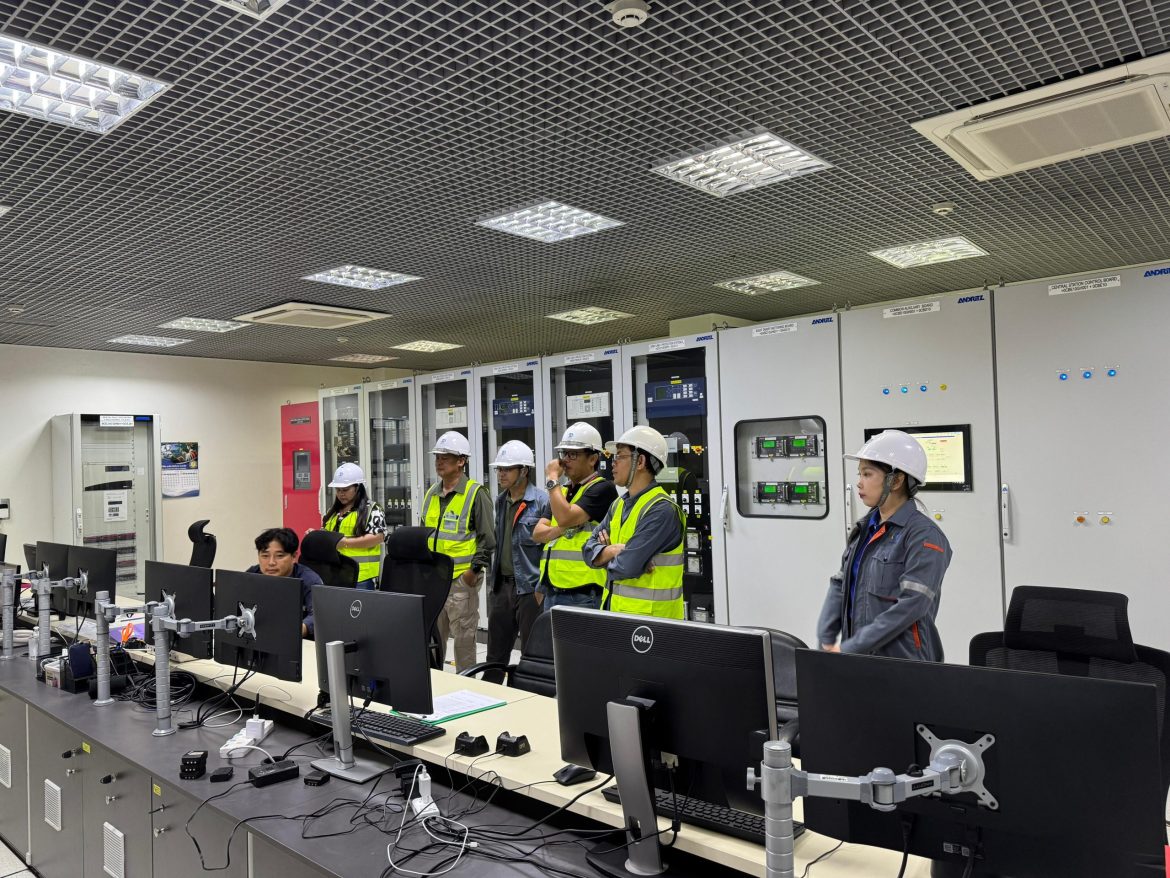
Every year during the rainy season, the National Disaster Management Committee conducts monitoring visits to inspect the water management practices of dams located across various river basins in Laos. These inspections aim to ensure dam safety and preparedness for potential flood risks during the wet season.
On July 13, 2025, Nam Theun 1 Power Company Limited (NT1PC) welcomed the Disaster Management Committee to its Pakkading site for an official monitoring visit. The delegation included representatives from the Ministry of Labor and Social Welfare, Ministry of Agriculture and Environment, Ministry of Industry and Trade, Ministry of National Defense, and the Prime Minister’s Office.
During the visit, NT1PC’s technical team presented an overview of the company’s rainy season preparedness measures, which included:
- Water level monitoring systems, rainfall forecasts, and real-time weather updates.
- Wet season preparedness activities, such as testing of hydro-mechanical equipment, spillways, and other critical dam infrastructure, as well as ongoing surveillance and structural monitoring.
- Reservoir management protocols specific to the rainy season.
- Emergency Action Plan (EAP), including communication protocols and channels for timely and accurate public announcements.
Following the presentation, the committee conducted a site visit to observe current reservoir water levels and toured the control room to view the automated water monitoring systems in operation.
This monitoring visit highlights the strong collaboration between NT1PC and the Lao government. It also demonstrates NT1PC’s commitment to transparency and safety, reinforcing our responsibility to protect the communities living near the project area—because every life matters.