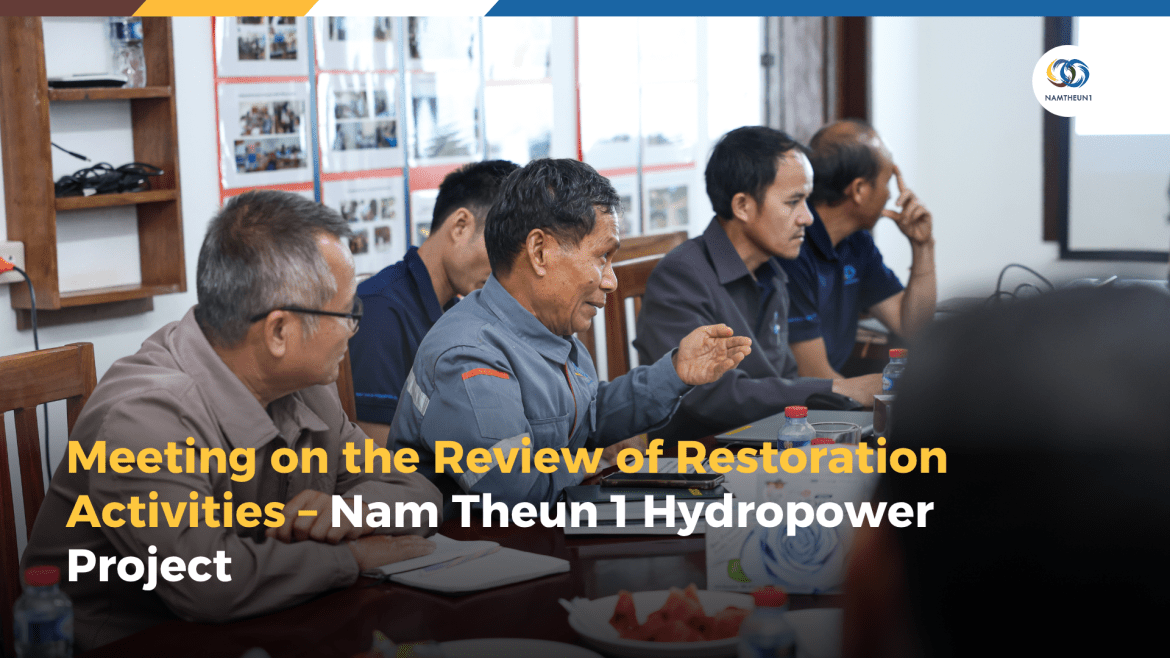
Bolikhamxay Province, October 23, 2025 — A meeting was convened at the Nam Theun 1 Power Company Limited (NT1PC) site office in Thaphae Village, Viengthong District, to review 22 restoration activities implemented under the Nam Theun 1 Hydropower Project (NT1HPP).
The meeting was chaired by Mr. Uthone Singhaduangpanya, Deputy Head of the Bolikhamxay Provincial Agricultural and Environment Department and Head of the Secretariat of the Resettlement Management Unit (RMU) for the Nam Theun 1 Hydropower Project. Participants included Mr. Bounnhang Phengsouvanh, Government Relations Advisor of NT1PC; members of the Viengthong District Working Group; the NT1PC Social Section team; and representatives from Huayhoy Village Authorities.
The primary objective of the meeting was to review the progress, effectiveness, and challenges of the ongoing restoration and livelihood improvement activities supported by NT1PC, as well as to discuss directions for future community development and support.
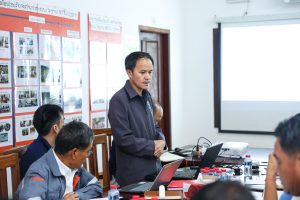
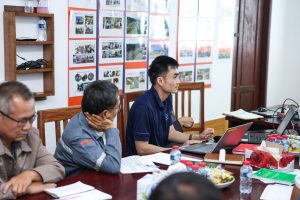
During the session, Mr. Yer Vangyiava, Deputy Social Manager of NT1PC, presented an overview of the livelihood improvement program’s progress, highlighting comparative results from 2024 and the first half of 2025. His presentation showed that while many activities continue to perform well and generate consistent income, some initiatives have faced implementation challenges. In several cases, the number of active participants has declined as some members became inactive or withdrew from the programs.
Following this, Mr. Nikone Soundala, Senior Income Generation Officer, presented findings from an external consultant identifying 70 households classified as low-income families, based on updated income data.
After both presentations, participants engaged in in-depth discussions and agreed on the following key points:
- Discontinuation of inactive members: Members who have withdrawn, become inactive, or transferred their activities to others will no longer be monitored. The focus will shift toward active participants and successful activities showing positive outcomes. The district, village organizations, and project developer have already mobilized efforts and documented action plans for these transitions.
- Adjustment of livelihood activities: Certain initiatives, such as food processing and small grocery groups, will be discontinued due to limited effectiveness. However, the committee agreed that these activities may be reconsidered in the future if they become relevant or viable again.
- Verification of low-income households: It was noted that the reported income of some families may not accurately reflect their actual living conditions. Participants agreed to re-verify household income data to ensure accuracy. For genuinely low-income households, further assessments will be carried out to identify the root causes and develop targeted solutions for livelihood improvement.
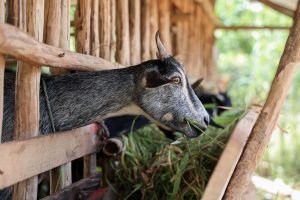
- Livestock management challenges: The meeting noted ongoing issues with the livestock-raising program in designated enclosed areas, as several families have yet to relocate their animals to the assigned zones. The RMU, in collaboration with the Protected Area Management Unit, will mobilize villagers to comply. In cases of continued non-compliance, the management unit may exercise its authority to enforce the relocation.
- Promoting ownership and sustainability: For families that have already moved their livestock, village authorities were encouraged to strengthen community ownership, particularly in maintaining cleanliness and ensuring the long-term sustainability of the designated areas.
In closing, Mr. Bounnhang Phengsouvanh provided strategic guidance to the social teams implementing the restoration programs. He emphasized the importance of innovation and creativity in expanding and enhancing livelihood activities to increase household income. He also reminded participants that achieving the project’s target of 200% income growth within the 10-year restoration period will require new approaches and stronger collaboration among all stakeholders.