
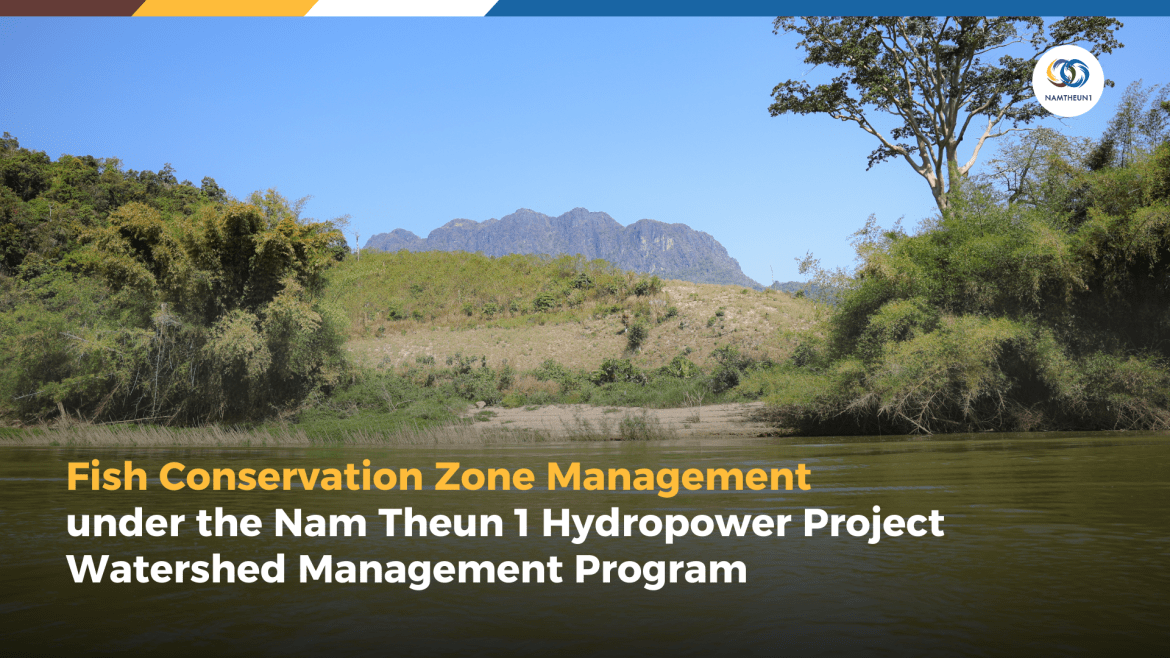
Under the Nam Theun 1 Hydropower Project Watershed Management Program, Nam Theun 1 Power Company Limited (NT1PC) provides financial support to relevant government agencies in Laos for program implementation. The Government plays a leading role in designing the program, preparing the budget, defining sub-activities, and serving as the primary implementing body. NT1PC works closely with the authorities to monitor progress and ensure that activities are carried out effectively and in accordance with the plan approved by the Forestry Department.
One of the key activities under the Watershed and Waste Management component is the identification of fish conservation zones. A fish conservation zone is a designated area established to protect aquatic species and their habitats. In addition to increasing fish populations, these sanctuaries contribute significantly to maintaining overall biodiversity and ecological balance through the following roles:
- Balancing fish diversity: Maintaining a healthy variety of fish species helps preserve ecological balance in the river. A diverse fish community can naturally regulate algae and aquatic plant growth, preventing excessive weed proliferation and supporting overall ecosystem stability.
- Maintaining water quality: Fish and certain aquatic species feed on algae, moss, and small organisms, helping to naturally purify the water and keep it clear and odor-free.
- Supporting fish stock expansion: Fish within the sanctuary can reproduce and gradually expand into surrounding areas, strengthening local fisheries and enhancing long-term sustainability.
Recognizing these benefits, the establishment of fish conservation zones has been incorporated into the primary plan agreed upon by NT1PC and the relevant government agencies.
From 11 to 25 February 2026, the implementation team carried out activities in four target villages. These activities included developing fish conservation zone management regulations, disseminating knowledge and best practices, and installing boundary markers for the designated areas. In the first village, NT1PC—led by Mr. Bounnhang Phengsouvanh, Advisor for Government Relations—joined the government team to monitor the implementation process.
During monitoring, several challenges were identified, particularly in ensuring broad community participation in the development and endorsement of sanctuary management regulations. As these rules require collective agreement, limited participation may weaken their effectiveness and reduce community ownership. Mr. Bounnhang Phengsouvanh therefore recommended that the implementation team and village authorities strengthen communication efforts to widely disseminate the agreed regulations, ensuring that villagers fully understand, support, and comply with them.
To ensure effective implementation, NT1PC conducts regular monitoring to align budget utilization with planned activities and to ensure that outcomes deliver tangible and lasting benefits to local communities. These efforts contribute to the sustainable development of the Nam Theun 1 watershed area.